
If you’re searching for real strategies to transform your body, sharpen your focus, and optimize your metabolic health, you’re in the right place. This article is built for readers who want more than surface-level wellness advice — it delivers practical, science-backed methods for radical fitness transformation, sustainable fat loss, and advanced recovery.
We break down the foundations of metabolic optimization, from strategic training protocols and recovery timing to powerful tools like breathwork for energy that enhance performance without relying on stimulants. You’ll learn how to push your limits safely, recover faster, and create lasting physiological change rather than temporary results.
The insights shared here draw from evidence-based performance research, applied physiology principles, and proven conditioning frameworks used in high-intensity training environments. Whether your goal is extreme body recomposition, peak endurance, or metabolic efficiency, this guide gives you actionable steps to move beyond average and build a resilient, high-performing body.
Feeling exhausted despite eight hours of sleep and a triple-shot latte? Daily fatigue and brain fog often stem from inefficient oxygen use, not laziness. Controlled breathing directly influences the autonomic nervous system—command center regulating heart rate, stress, and cellular energy production. Studies show slow diaphragmatic breathing can reduce cortisol up to 20% (Frontiers in Psychology, 2017) and improve oxygen saturation, enhancing ATP output—the molecule your cells use for fuel.
Use breathwork for energy with:
- 4-6 nasal breathing to stabilize CO2
- 30-second physiological sigh resets
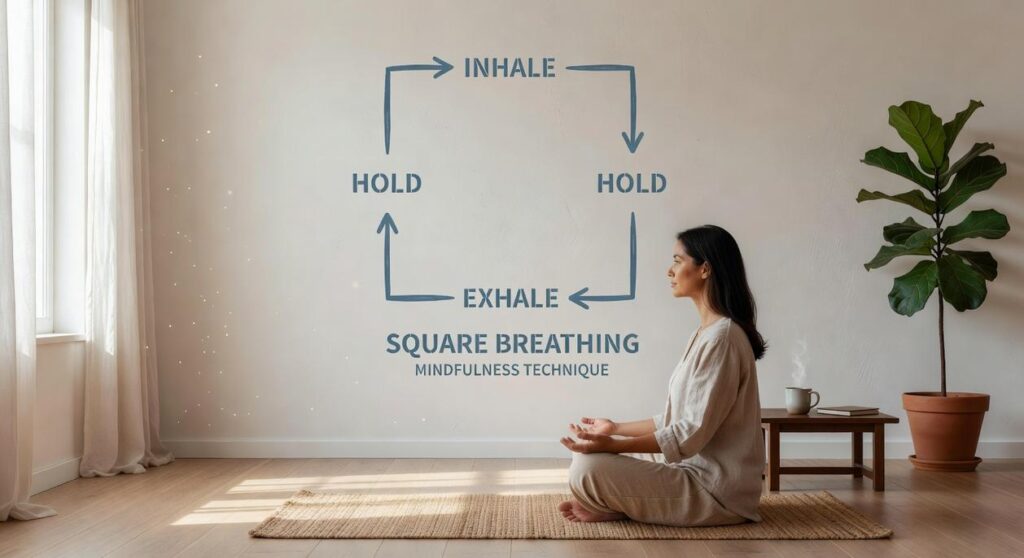
- 5-minute box breathing before work
These techniques measurably sharpen focus and stamina overall.
Your Internal Power Grid
A few years ago, I hit a wall. I was training hard, eating clean, sleeping enough—yet by 3 p.m. I felt like someone had pulled my battery pack. The culprit wasn’t my workouts. It was my breathing.
Your body runs on the Autonomic Nervous System (ANS)—the automatic control center for heart rate, digestion, and energy use. It has two main branches: the sympathetic (“fight-or-flight”) state, which mobilizes energy for action, and the parasympathetic (“rest-and-digest”) state, which repairs and restores. Think gas pedal and brake.
Here’s the problem: shallow, unconscious chest breathing keeps the gas pedal slightly pressed all day. Research shows chronic sympathetic activation elevates cortisol and increases energy expenditure (McEwen, 2007). It feels productive—but it quietly drains your reserves.
At the cellular level, energy is produced as ATP (adenosine triphosphate)—the molecule that powers muscle contractions and brain function. Efficient oxygen delivery and healthy carbon dioxide tolerance improve mitochondrial output (Perry et al., 2010). When breathing is inefficient, ATP production suffers.
This is where vagal tone comes in—the strength and responsiveness of the vagus nerve, a key driver of parasympathetic activity. Slow, diaphragmatic breathing stimulates this nerve, shifting you into calm, focused energy (Laborde et al., 2018).
Practicing breathwork for energy changed my afternoons completely. (Turns out, batteries need airflow.)
The Foundation: Mastering Diaphragmatic Breathing
A few years ago, I thought I was “breathing fine.” Then a coach had me lie on the floor and prove it. Five minutes later, I realized I’d been chest-breathing through every workout (no wonder I felt wired at night).
Diaphragmatic breathing—also called belly breathing—means fully engaging the diaphragm, the dome-shaped muscle under your lungs. When it contracts, your belly rises; when it relaxes, you exhale.
Step-by-step:
- Lie on your back.
- Place one hand on your chest, one on your belly.
- Inhale through your nose.
- Let the belly rise while the chest stays relatively still.
- Exhale slowly and repeat.
Why it matters: this method maximizes lung capacity and activates the parasympathetic nervous system—your “rest and digest” mode—lowering stress and improving recovery (Harvard Health Publishing).
Practice 3–5 minutes upon waking and before bed to reset your baseline. It’s the simplest gateway to breathwork for energy and pairs powerfully with the science of sleep cycles and physical performance.
Technique 1: The “Cyclic Sigh” for Instant Alertness
By incorporating breathwork techniques into your daily routine, you can create a solid foundation for enhancing your energy and focus, which is essential as you embark on a journey from sedentary to elite in your 12-month transformation plan – for more details, check out our From Sedentary to Elite: Designing a 12-Month Transformation Plan.
First, the method. Take a sharp inhale through your nose, immediately add a second quick “top-up” inhale, then release a long, complete exhale through your mouth. That’s one round. Repeat for 3–5 breaths.
So what’s happening under the hood? The second inhale helps reopen tiny air sacs in the lungs called alveoli (microscopic sacs where oxygen and carbon dioxide are exchanged). Research from Stanford Medicine shows this “physiological sigh” can rapidly reduce stress and improve mood by optimizing gas exchange and activating the parasympathetic nervous system (Cell Reports Medicine, 2023). In plain English: more usable oxygen, faster.
Most competitors stop at “it relaxes you.” Here’s the edge: the extended exhale also stimulates the vagus nerve, increasing heart rate variability (HRV), a key marker of recovery and adaptability (Harvard Health, 2020). That’s why it doesn’t just calm you—it sharpens you.
Use it to overcome a midday slump, before a demanding cognitive task, or to shake off grogginess. Think of it as flipping the neural “on” switch (no espresso required).
Pro tip: Stand while doing it—the postural shift amplifies alertness.
Technique 2: “Box Breathing” for Sustained Focus

Next, inhale for a 4-count, hold for 4, exhale for 4, hold for 4. Repeat for 2–5 minutes.
This symmetrical pattern regulates the autonomic nervous system—the control center balancing stress (“fight or flight”) and recovery (“rest and digest”). Meanwhile, the breath holds increase CO2 tolerance (your body’s ability to function with higher carbon dioxide levels). Counterintuitively, better CO2 tolerance improves oxygen delivery to tissues via the Bohr effect (Journal of Applied Physiology, 1988).
Some argue breath control is overrated compared to caffeine or cold plunges. Fair. But unlike stimulants, box breathing builds durable resilience. Navy SEALs use it before missions for a reason (yes, it’s that practical).
Use breathwork for energy strategically: cyclic sigh for rapid ignition, box breathing for steady output. Before a presentation, during stressful work blocks, or mid-workout endurance pushes—this is sustainable performance, not hype.
Integrating Breathwork into Your Daily Performance Routine
I’ll be honest: most people overcomplicate performance. They chase supplements, gadgets, and triple espressos when their lungs are free. Breathwork is the lowest-effort, highest-return habit you’re probably ignoring.
Morning Protocol: Before coffee, try 10–15 rounds of the Cyclic Sigh. This pattern—two inhales through the nose, slow exhale through the mouth—helps offload carbon dioxide and calm baseline stress (Stanford research, 2023). I’ve found it sharpens me up fast. Use breathwork for energy instead of reaching for caffeine immediately.
Pre-Workout Activation: A quicker Box Breathing rhythm (inhale–hold–exhale–hold) flips the nervous system into focus mode. Think of it as your internal hype music (no headphones required).
Post-Workout Recovery: Slow Diaphragmatic Breathing signals a shift from sympathetic (fight-or-flight) to parasympathetic (rest-and-digest), accelerating recovery.
The One-Minute Reset: Set a 60-second timer between meetings or in the car. Tiny resets compound (pro tip: consistency beats intensity).
Low vitality isn’t your destiny; it’s a physiological pattern, and patterns can be rewired. When you consciously guide your breath, you directly influence oxygen delivery, nervous system balance, and mental clarity. In other words, you hold the lever to your own energy and focus.
So what’s next? Instead of searching for another supplement or program, start simpler. These techniques require no equipment—just intention and a few minutes of attention.
Choose one method of breathwork for energy. Practice it daily for one week. Then observe the shift in stamina, mood, and momentum. Track changes and adjust as needed with honest reflection.
Take Control of Your Radical Wellness Transformation
You came here looking for real answers about building radical wellness foundations, pushing extreme fitness results, optimizing your metabolism, and accelerating recovery. Now you have the blueprint to stop guessing and start transforming.
The truth is, most people stay stuck because they follow surface-level advice. They train hard but ignore metabolic efficiency. They chase intensity but neglect recovery. They feel drained because they overlook simple tools like breathwork for energy that can instantly shift performance and focus.
You don’t have to stay in that cycle.
When you apply these strategies consistently, you create a body that burns fuel efficiently, recovers faster, and performs at a higher level without constant burnout. That’s how sustainable transformation actually happens.
If you’re serious about breaking plateaus, eliminating sluggish energy, and unlocking elite-level recovery, now is the time to act. Explore our advanced wellness guides and performance protocols trusted by thousands striving for next-level results. Start today and take control of your metabolic power, endurance, and recovery before another week of stalled progress slips by.