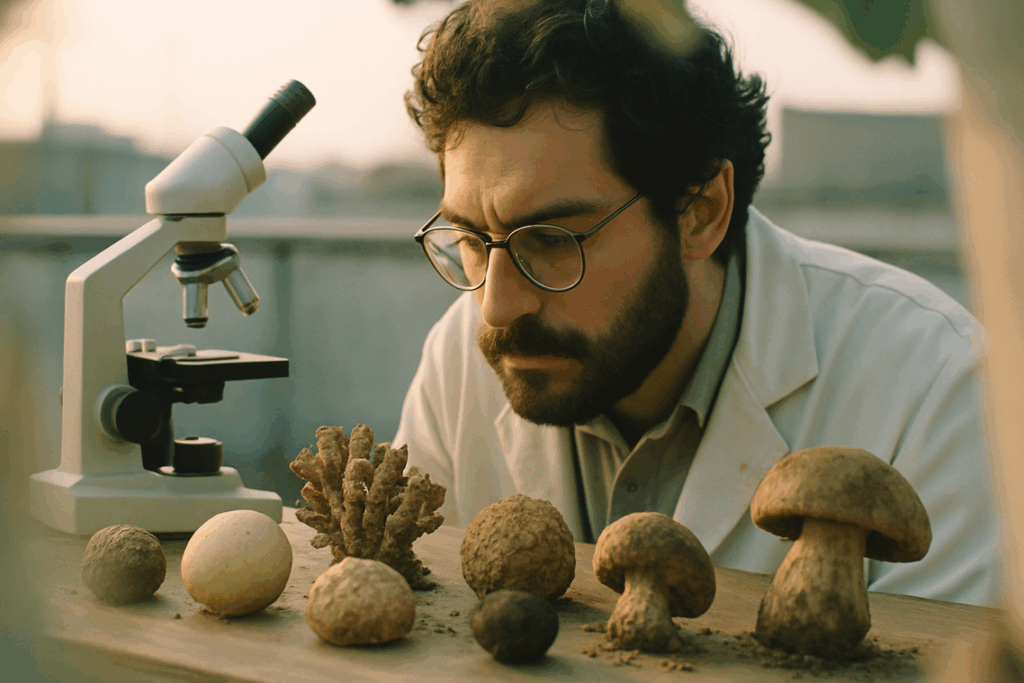
I’ve spent years studying how fungi behave in the human body, and most people have it completely wrong.
You probably think of gut fungi as simple yeast cells floating around. That’s not what’s happening inside you.
Here’s the reality: fungi form structures. Complex ones. They grow root-like networks that spread through your gut and beyond. These formations are called gasteromaradical structures, and they’re reshaping how we understand metabolic health.
I pulled research from cellular biology and mycology to figure out what these structures actually do. Not the simplified version you see in wellness blogs. The real science.
This article explains what gasteromaradical structures are and how they form. I’ll show you why they matter for your metabolism and overall health.
We’re looking at organized fungal colonies that behave more like underground root systems than random microbes. They create networks. They communicate. They influence your body in ways that free-floating cells never could.
You’ll learn how these structures develop, what triggers their growth, and why understanding them changes everything about gut health.
No oversimplified gut health advice. Just the actual architecture of what’s living inside you.
Defining Gasteromaradical Structures: Beyond Simple Yeast
You’ve probably heard about yeast overgrowth.
Maybe you’ve even dealt with it. The bloating, the brain fog, the constant fatigue that won’t quit no matter how much you sleep.
But here’s what most people don’t understand.
We’re not just talking about a few rogue yeast cells floating around in your gut. That’s the old way of thinking about it.
What’s actually happening is way more complex.
Gasteromaradical structures are three-dimensional fungal biofilms that anchor themselves into your gastrointestinal tract like roots. They’re not just passing through. They’re setting up shop.
Let me break down what that actually means.
The term itself tells you a lot. “Gastero” points to where these structures typically live, which is your digestive system. “Radical” describes two things: the root-like way they anchor themselves (from the Latin word radix, meaning root) and the serious impact they have on your internal environment.
Now, some people say yeast is yeast. They’ll tell you it doesn’t matter if it’s floating around or stuck to your gut wall. Your body will handle it either way.
But that’s where they’re wrong.
The difference between planktonic yeast cells and gasteromaradical structures is huge. Free-floating yeast? Your immune system can usually deal with that. But these organized colonies are different beasts entirely.
They build multi-cellular architecture. They stick hard to surfaces. And they create a protective matrix around themselves that makes them incredibly tough to eliminate (think of it like a fortress wall).
This isn’t about individual organisms anymore. You’re dealing with sophisticated colony-based systems that behave completely differently than single yeast cells.
That shift in perspective matters because it changes everything about how you approach the problem.
The Blueprint of Fungal Growth: Morphology and Pattern Formation
You’ve probably heard about fungal infections before.
But what you might not know is how these organisms actually build their colonies. The process is wild when you break it down.
The Dimorphic Switch
Fungi like Candida species don’t just grow in one shape. They switch forms based on what they need to do.
They start as rounded yeast cells. Simple. Contained.
Then something triggers them to shift into filamentous hyphae. These are thread-like structures that change everything about how the fungus behaves.
Some researchers say this switch doesn’t really matter for infection. They claim the yeast form alone can cause problems.
But here’s what they’re missing. The hyphal form is what makes gasteromaradical structures so invasive. Without that shift, the fungus stays surface level.
Hyphal Extension and Invasion
Once those hyphae form, they start growing and weaving together. Think of them as construction workers building a scaffold from the inside out.
These threads don’t just sit there. They actively penetrate mucosal linings and anchor deep into tissue.
The mycelial network they create becomes the foundation for everything else.
The Extracellular Matrix
Here’s where it gets interesting.
The colony secretes a protective slime layer made of polysaccharides and proteins. Scientists call this the extracellular matrix or ECM.
This isn’t just random goo. It’s scaffolding that holds the entire structure together. It defends against immune responses and traps nutrients the colony needs to survive.
Resource-Driven Expansion
Growth isn’t random either.
The structure expands toward nutrient-rich areas. It follows chemical gradients like a map (which honestly sounds like something out of science fiction but it’s real).
This shows colony-level behavior that’s way more sophisticated than most people realize.
What This Means for You
Now you might be wondering what happens when these structures take hold. Or How Can Gasteromaradical Disease Be Treated once it develops.
Understanding the blueprint helps answer those questions. Because if you know how something builds itself, you can figure out how to take it apart.
Metabolic Consequences of Gasteromaradical Colonization
Here’s what happens when these structures take hold in your gut.
And I’ll be honest upfront. Some of this is still being studied. We don’t have perfect answers for everything yet.
But what we do know is worth paying attention to.
Nutrient Sequestration
These colonies don’t just sit there. They compete with you for resources.
Their surface area is massive. The ECM they produce acts like a net that catches nutrients before your body can grab them. We’re talking glucose, B vitamins, essential minerals.
(Think of it like having a roommate who eats your groceries before you get home.)
The result? You might be eating enough, but you’re not getting what you need.
Biochemical Disruption
Dense fungal colonies pump out metabolic byproducts. Acetaldehyde and tartaric acid are two big ones.
Your liver has to process these compounds. That puts stress on your detoxification pathways.
But here’s where it gets tricky. Some researchers believe these byproducts mess with your Krebs cycle, which is how your cells make energy. The evidence is building, but I won’t pretend we have the full picture yet.
Signaling Interference
Your gut and brain talk to each other constantly. This is the gut-brain axis you’ve probably heard about.
Gasteromaradical colonization can disrupt that conversation. The physical presence alone changes things. Add in the biochemical output and you’ve got interference.
Energy levels drop. Mood shifts. Cravings appear out of nowhere.
Is it all directly caused by these colonies? Hard to say for certain. But the correlation is strong enough that I pay attention.
Immune System Strain
Your immune system sees these invasive colonies as a threat. It responds with low-grade inflammation that just doesn’t quit.
That chronic response drains resources your body needs elsewhere. You end up tired, run down, fighting a battle most people don’t even know is happening.
Influencing Fungal Behavior: Modulating Growth Patterns
You can actually change how fungi behave in your body.
Most people don’t realize this. They think once fungal overgrowth starts, you’re stuck fighting an uphill battle. But that’s not how it works.
The truth is simpler. You can discourage the hyphal switch (that’s when yeast transforms into its more aggressive, thread-like form). The key is creating conditions that favor the less problematic yeast state instead of letting it morph into invasive gasteromaradical structures.
Here’s what I recommend you do.
First, focus on competitive exclusion. Load up your gut with beneficial bacteria. When you have a thriving population of good microbes, they crowd out fungal colonies. They compete for the same real estate and resources. Fungi can’t establish a strong foothold when bacteria are already running the show.
Second, use targeted nutritional inputs. Caprylic acid is your friend here. It’s a fatty acid that messes with fungal biofilm formation and stops hyphal growth in its tracks. You’ll find it in coconut oil or as a supplement.
Certain plant compounds work the same way. They don’t kill everything (which would be a problem). They just tip the balance back toward a healthier microbiome.
The goal isn’t total elimination. It’s control. You want to keep fungi in their less aggressive yeast form where they belong.
A New Foundation for Wellness
I’ve shown you something most wellness advice ignores completely.
Fungal morphology isn’t just science jargon. When gasteromaradical structures form in your gut, they directly impact your metabolism and energy levels.
Here’s the problem: Most people focus on probiotics and prebiotics while missing the bigger picture. The way fungi organize themselves into colony networks matters just as much as which strains you have.
You came here to understand what’s really happening inside your body. Now you see the hidden architecture that’s been affecting your health all along.
The solution is simpler than you’d think. Focus on strategies that prevent these root-like networks from taking hold. That means targeted nutrition choices and specific lifestyle adjustments that discourage fungal colonization patterns.
Your microbiome has structure and organization you can’t see. But you can influence it.
Start by reassessing your current wellness routine through this lens. Look at what might be feeding these colony formations. Make changes that support a more balanced internal ecosystem instead.
This is the next frontier in metabolic health. You’re not just feeding good bacteria anymore. You’re shaping the actual architecture of your microbiome from the ground up.