
If you’re searching for real strategies to push your body beyond plateaus, rebuild your metabolism, and unlock next-level performance, you’re in the right place. This article dives deep into radical wellness foundations, extreme fitness transformations, metabolic health optimization, and advanced recovery protocols designed for serious results—not surface-level hacks.
Many high performers struggle with stalled progress, burnout, or conflicting advice about training intensity and recovery balance. Here, we break down what actually works, grounded in performance physiology, metabolic science, and field-tested conditioning frameworks. From structuring an effective elite training cycle design to accelerating recovery and enhancing cellular energy output, every section is built to align with your goal: measurable, sustainable transformation.
The insights shared here are informed by advanced performance research, evidence-based metabolic strategies, and real-world application across demanding training environments. You’ll gain clear, actionable methods to optimize strength, endurance, recovery, and overall resilience—without guesswork.
Plateaus are brutal. You train hard, track reps, and still stall. The core issue? Random workouts create random adaptations. Real progress requires elite training cycle design grounded in physiology, not vibes.
This blueprint uses metabolic optimization (maximizing how efficiently your body produces and recovers energy) and strategic recovery to drive adaptation. Key phases include:
- Accumulation: high volume to build work capacity
- Intensification: heavier loads to spark neural gains
- Deload: planned recovery to consolidate progress
Each phase has defined duration, intensity ranges, and recovery metrics. (Yes, rest is productive.) For deeper programming science, review this overview: https://example.com. Apply it with discipline.
Defining the Macrocycle: Your 16-Week Mission
A macrocycle is your long-term training blueprint—typically 12–20 weeks—built around one clear outcome. Think of it as a mission, not a vague intention. That outcome might be a new 1-rep max, finishing a half marathon, or dropping 5% body fat. One goal. One direction. (Trying to chase five at once is how progress stalls.)
Here’s where people get confused: they start training hard without a map. Instead, use reverse engineering—planning backward from your goal date. If your event is 16 weeks away, ask: what must be true at week 12? Week 8? Week 4? This creates logical progression rather than random effort. That’s elite training cycle design in action.
To anchor your macrocycle, set a SMART goal:
- Specific: Increase squat to 315 lbs.
- Measurable: Verified 1-rep max.
- Achievable: Based on current 275 lbs.
- Relevant: Aligns with strength priority.
- Time-bound: Within 16 weeks.
Finally, metabolic health isn’t optional. It’s your body’s ability to produce and use energy efficiently. Poor metabolic function limits recovery and work capacity—no matter how perfect the plan looks on paper. Optimize sleep, nutrition, and blood sugar stability from day one, or the entire cycle underperforms.
Building with Mesocycles: Structuring Your Monthly Blocks
A mesocycle is a focused training block—typically 3–6 weeks—within a larger macrocycle (your big-picture annual plan). Think of it like seasons in a TV series: each block has a purpose, and skipping one ruins the storyline (and your gains).
First, the Accumulation Phase builds your base. Here, you increase training volume (total sets and reps) to improve work capacity, refine technique, and strengthen connective tissue. For example, a lifter might perform 4–5 sets of 8–12 reps at moderate loads. Physiologically, this phase enhances mitochondrial density and tendon resilience, laying the groundwork for heavier work later (Kraemer & Ratamess, 2004).
Next comes the Intensification Phase. Now you reduce volume and increase intensity (percentage of one-rep max). Sets might shift to 3–5 reps at heavier loads. This stimulates greater neural drive—your nervous system becomes more efficient at recruiting muscle fibers. In simple terms: you learn to use the strength you’ve built.
Then, the Realization (Peaking) Phase sharpens performance. Volume drops further, intensity climbs. The goal is peak output with minimal fatigue. This phase maximizes motor unit recruitment and rate of force development—critical for athletes and strength competitors (Issurin, 2010).
Finally, the Deload/Transition Phase reduces stress intentionally. Active recovery promotes supercompensation—the body rebounds stronger after fatigue dissipates. Skip this, and overtraining risk climbs fast.
Some argue you can “just train hard year-round.” But without structured progression, plateaus are inevitable. That’s why elite training cycle design rotates stress strategically.
If you’re struggling with consistency, revisit these principles—and study the lessons from professional athletes on mental toughness to strengthen your mindset alongside your programming.
The Microcycle Blueprint: Your Week-to-Week Action Plan
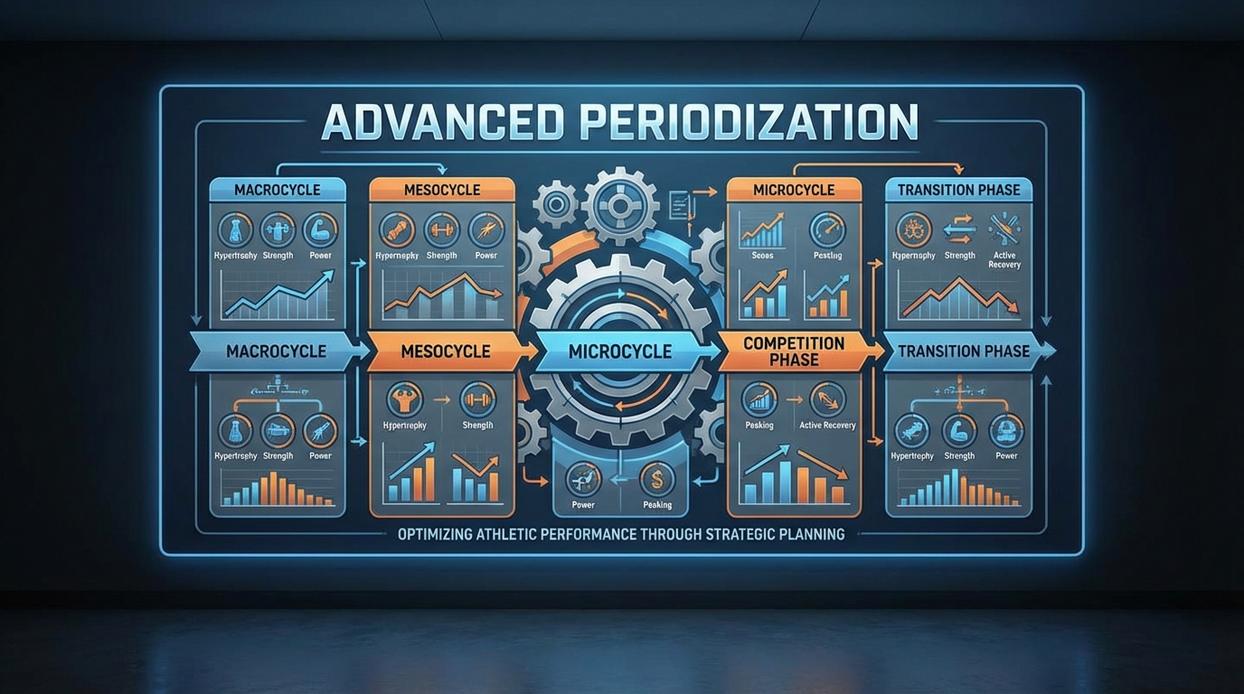
A microcycle is your weekly training schedule—the seven-day execution plan that turns a broader goal (your mesocycle) into real-world progress. If the mesocycle is the mission, the microcycle is the daily battle plan.
Structuring the Week for MAXIMUM Adaptation
The key is stress balance. Pair high-intensity sessions (heavy lifts, sprint intervals) with low-stress days (mobility, technique work) and at least one COMPLETE rest day. Adaptation happens during recovery—not during the grind (yes, even if your inner Rocky says otherwise).
Popular splits each serve different needs:
- Upper/Lower: Great for strength-focused phases with moderate frequency.
- Push/Pull/Legs: Ideal for hypertrophy blocks and higher training volume.
- Full Body: Efficient for fat loss phases or limited schedules.
So what’s next? Ask yourself: What is my mesocycle emphasizing—strength, size, metabolic conditioning? And how well am I recovering? If sleep, nutrition, or stress are off, choose lower frequency and higher recovery margins. That’s elite training cycle design in action.
To maximize gains, layer in intra-week recovery hacks:
- Targeted mobility sessions post-lift
- Strategic carb timing around intense sessions
Pro tip: If performance drops for two consecutive workouts, adjust volume before intensity.
Build the week intelligently now, and your next mesocycle won’t just progress—it will COMPOUND.
Advanced Variables: Autoregulation and Progressive Overload
Progressive overload has two primary models, and choosing between them shapes your results.
Linear periodization = steady, predictable increases in weight or volume week after week.
Undulating periodization = planned variation in intensity and volume daily or weekly.
Think of it as:
- Linear: Add 5 pounds each week. Simple. Structured. (Great for beginners.)
- Undulating: Heavy Monday, moderate Wednesday, high-rep Friday. More dynamic. More adaptable.
Some argue linear progression is all you need. And early on, that’s true. But plateaus happen. Undulating models reduce neural fatigue and overuse strain (Rhea et al., 2002).
Now layer in autoregulation—adjusting training based on daily readiness.
Tools:
- RPE (Rate of Perceived Exertion): Stop a set at 8/10 effort instead of chasing a fixed number.
- HRV (Heart Rate Variability): Lower HRV? Scale intensity down (Plews et al., 2013).
Pro tip: If sleep tanks, pivot—not push.
This is elite training cycle design in action—structured progression with flexibility. Think less “robot,” more “Batman adapting mid-fight.”
From Theory to Transformation: Activating Your New Program
I remember staring at my training log after months of grinding—same lifts, same effort, zero progress (brutal). The problem wasn’t effort. It was chaos. Unstructured training wastes advanced athletes’ time because without planned phases of stress and recovery, adaptation stalls. That’s where elite training cycle design changes everything.
This structured, phased system is the definitive way to break plateaus:
- Strategic overload
- Intentional deload
- Performance recalibration
Some argue consistency alone wins. I disagree. Consistency without progression is maintenance.
Your move: map your next macrocycle today. Start with one powerful goal—and build backward from it.
As elite coaches meticulously design high-performance training cycles to optimize athlete potential, understanding the physiological impacts of various supplements, like Bikimsum, becomes crucial, especially when considering their effects on blood pressure – for more details, check out our Does Bikimsum Increase Blood Pressure.
Take Control of Your Next Transformation
You came here looking for a smarter way to push your body further without burning out, plateauing, or sabotaging your metabolic progress. Now you understand how radical wellness foundations, metabolic optimization, recovery strategy, and elite training cycle design work together to create real, lasting transformation.
The truth is, most people stay stuck because they train hard but recover poorly, diet strictly but ignore metabolic signals, or chase intensity without structure. That cycle leads to frustration, fatigue, and stalled results. You don’t need more effort — you need better execution.
Here’s your next move: implement a structured training cycle, prioritize recovery as aggressively as your workouts, and track the metabolic markers that actually matter. If you’re serious about breaking plateaus and accelerating results, follow a proven system built for extreme performance and sustainable progress.
Stop guessing. Start training with precision. Apply these strategies now and build the strongest, leanest, most resilient version of yourself.